
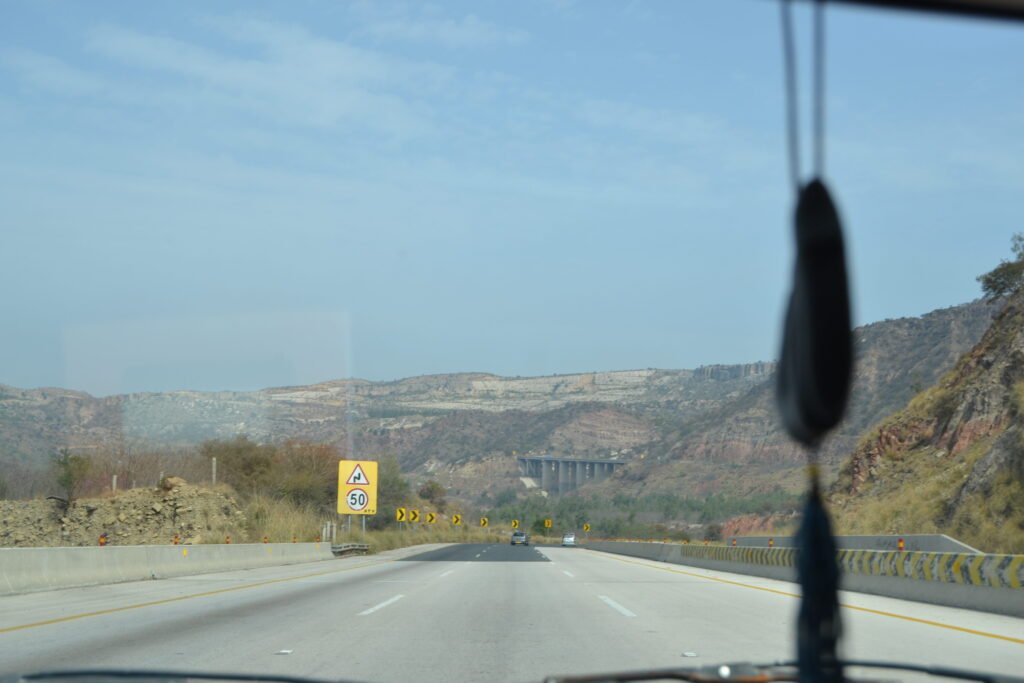
Islamabad to Chakwal: Distance, Drive Time and Best Route
Chakwal city sits about 90 kilometres south-east of Islamabad in a straight line, and the drive between the two takes roughly one and a half to two hours. If you are asking about the Islamabad to Chakwal distance, the short answer is this: by road it is about 110 to 130 kilometres, depending on where in Islamabad you start and which route you take, and the M2 motorway is the fastest and simplest way to cover it. Chakwal is the headquarters of its district, and the road that links it to the capital is one of the busiest district journeys in the Pothohar region.
How Far Is Chakwal from Islamabad?
The straight-line distance from Islamabad to Chakwal is about 89 to 90 kilometres, which is the figure distance calculators give. The road distance is longer, because the motorway curves around the hills: most driving guides put it at around 113 kilometres, and some routes measure closer to 130 kilometres if you start from the far side of Islamabad or take the older road through Rawalpindi. For planning purposes, think of it as a 110 to 130 kilometre drive, not a 90 kilometre one — the straight-line figure will mislead you if you use it to estimate fuel or time.
The drive time follows the same pattern. On the M2 motorway, with clear traffic, the journey usually takes between one and a half and two hours from central Islamabad. Leave from the Islamabad International Airport side of the city and the road distance is about 111 kilometres, which takes a similar amount of time. Leave in the evening rush or on a foggy winter morning and you should allow extra time.
What Is the Best Route from Islamabad to Chakwal?
The best route for almost every traveller is the M2, the Lahore–Islamabad Motorway. From Islamabad, join the motorway heading south towards Lahore, stay on it past the hills, and take the Chakwal interchange exit. From the interchange, a link road runs into Chakwal city — that last stretch takes about 20 to 25 minutes. The motorway section is smooth, well-marked and dual carriageway throughout, and it is the reason this journey feels so much shorter than the distance suggests.
A few practical points about the motorway leg: the M2 is a tolled motorway, so a toll applies at the plazas — an M-Tag makes the passage quicker, and cash lanes are available for those without one. Fuel stations and rest areas sit along the motorway, so fill up before you leave Islamabad or stop at a service area on the way. In the winter months, dense fog can slow or temporarily close stretches of the motorway in the early morning; on a foggy day, check the motorway’s status before you set off rather than discovering the closure at the entry point.
Is There a Route from Islamabad to Chakwal Without the Motorway?
Yes, and it is the route people used before the motorway existed: through Rawalpindi and then south on the older GT Road and district roads. It is a usable alternative, especially if the motorway is closed, but it is slower — expect two to two and a half hours, sometimes more in Rawalpindi traffic — and it passes through towns and slower traffic all the way. For a first-time traveller, or anyone in a hurry, the M2 is the better choice; keep the older road in mind only as a backup.
One more route is worth knowing about if your journey continues past Chakwal. The Kallar Kahar interchange on the M2, further south than the Chakwal exit, is the gateway to the Salt Range — to Kallar Kahar town and its lake, and onward to Choa Saidan Shah and the Katas Raj Temples. If you are heading to the Salt Range rather than Chakwal city itself, that exit is the one to take, and our guide to reaching Choa Saidan Shah from Islamabad covers that leg in detail.
How Long Does the Drive from Islamabad to Chakwal Take?
In normal conditions, plan on one and a half to two hours door to door. The motorway section itself is usually a little over an hour; the rest is getting to the motorway from your starting point in Islamabad and the link road from the Chakwal interchange into the city. Three things can stretch the journey: evening traffic leaving Islamabad, fog in the winter months, and the slower final stretch into Chakwal city itself, which passes through busier local traffic.
If you are travelling for a fixed appointment — a family visit, a court date, a hospital visit — leave an extra half hour in hand. The road is reliable, but the Pothohar winter fog and Islamabad’s evening rush are both regular enough that a tight schedule is a gamble. For a relaxed trip, a morning departure is the most comfortable: the light is good, the motorway is quiet, and you arrive in Chakwal with the whole day ahead of you.
How Much Does the Islamabad to Chakwal Trip Cost by Car?
The main costs are the motorway toll and the fuel. At the current notified fuel prices — petrol Rs330 a litre and diesel Rs360 a litre, in force from 14 to 16 November 2026 under OGRA’s daily pricing — a one-way trip in an average petrol car uses roughly 8 to 10 litres of fuel, which works out at about Rs2,600 to Rs3,300 for fuel one way. Diesel cars use a little less. Add the motorway toll, which is modest for this distance, and the total one-way cost for a car is a few thousand rupees. Fuel prices under the daily mechanism can change from day to day, so treat these figures as a guide for this week rather than a fixed fare — check the current notified price before you travel.
Can I Travel from Islamabad to Chakwal by Public Transport?
Yes. Coaches, vans and coasters run between Rawalpindi and Islamabad and Chakwal through the day, and the journey by public transport takes roughly two to two and a half hours, depending on the service and the traffic. Most services leave from the bus stands in Rawalpindi and Islamabad; ask at the stand for the next departure to Chakwal, and confirm whether the coach goes to the city centre or drops you on the outskirts.
This guide deliberately does not print a timetable or a fare. Departures on this route are frequent but not fixed to a published schedule in the way a city bus is, and a fare printed here would be out of date quickly. Check at the stand on the day, allow a little extra time rather than planning a tight connection, and agree on the fare before boarding if you are taking a private hire. If you are travelling with luggage or family, a hired car from Islamabad is also an option — agree on the price before you set off, and confirm whether it covers the return trip if you want the driver to wait.
What Is Chakwal City Like When You Arrive?
Chakwal is the district headquarters of Chakwal District, a city with a long history — local history records it as founded in 1525, during the era of the Mughal emperor Babur, and named after Chaudhry Chaku Khan. Today it is a busy market and administrative town, and the natural base for exploring the district: Choa Saidan Shah and the Katas Raj Temples lie about 35 kilometres to the south on the Chakwal–Khewra road, and our guide to reaching Choa Saidan Shah from Chakwal covers that onward leg.
If you are arriving for the first time, a few things are worth knowing. Fuel stations, banks and places to eat are all easy to find in the city, so top up before heading further south into the Salt Range, where services are thinner. The city sits on the edge of the Salt Range hills, so the landscape changes quickly once you leave it — dry hills, acacia trees and terraced fields, the classic Pothohar scenery of this district. And if you are continuing to Choa Saidan Shah, the onward drive is one of the prettiest short drives in the district, descending into the bowl-shaped valley the town sits in.
When Is the Best Time to Travel from Islamabad to Chakwal?
The road is open all year, but the seasons change the experience. Spring and autumn are the most comfortable: mild temperatures, green hills after the rains, and good visibility. Summer brings heat, so travel early in the day and carry water. Winter mornings can be foggy — the Pothohar fog is famous, and it is the one season when the motorway can slow you down or close briefly. If you are travelling in December or January, a late-morning departure usually gives clearer conditions than a dawn start.
For a day trip, the timing is forgiving: leave Islamabad in the morning, spend the day in Chakwal or beyond, and drive back in the late afternoon. The return journey in the evening light, with the Salt Range hills on the horizon, is one of the quiet pleasures of this route — and a reminder of how close the capital and the district really are.
Frequently Asked Questions
What is the distance from Islamabad to Chakwal?
About 89 to 90 kilometres in a straight line, and about 110 to 130 kilometres by road, depending on your starting point and route. The M2 motorway route is around 113 kilometres.
How long does it take to drive from Islamabad to Chakwal?
Usually one and a half to two hours by car on the M2 motorway in normal traffic. Allow extra time in the evening rush or in winter fog.
Which is the best route from Islamabad to Chakwal?
The M2 motorway southbound from Islamabad, exiting at the Chakwal interchange, then the link road into the city. It is faster and simpler than the older route through Rawalpindi.
Is there a bus or van from Islamabad to Chakwal?
Yes — coaches, vans and coasters run between Rawalpindi/Islamabad and Chakwal through the day. Timings and fares vary, so check at the bus stand on the day of travel.
How far is Chakwal from Islamabad International Airport?
About 111 kilometres by road, which takes roughly the same one and a half to two hours as the drive from central Islamabad.
Can I continue from Chakwal to Choa Saidan Shah and Katas Raj?
Yes. Choa Saidan Shah is about 35 kilometres south of Chakwal city on the Chakwal–Khewra road, and the Katas Raj Temples are about 6 kilometres from the town — the two are easily combined in one day trip.